
Forbidden Planets Magazine #16 – Now available for download from Lektu, free. Optimized for double-page reading
Eleven months ago
Isaac Asimov continues in New Guide to Science showing us his enthusiasm and ability for scientific dissemination, postulating about the possibilities for the human species to understand itself through the creation of intelligences similar to its own. As a good scientific positivist, he does not doubt the possibilities for humans to achieve this dream, but he has no hesitation in recognizing the special circumstances surrounding the functioning of our mind, still hidden and with no clear prospects of understanding its intricacies.
Brilliantly, and just like other great science fiction writers committed to science such as Stanislaw Lem, he questions the practical usefulness of obsessing over the goal of recreating our mind exactly, showing himself in favor of seeking an artificial intelligence that complements us, instead of one that could replace us.
What achievement would be greater than the creation of an object that surpasses its creator? How could we consummate the victory of intelligence artificial intelligence blog in a more glorious way than by transmitting our heritage, in triumph, a superior intelligence, and of our own creation?
But let us be practical. Is there any current danger of replacement?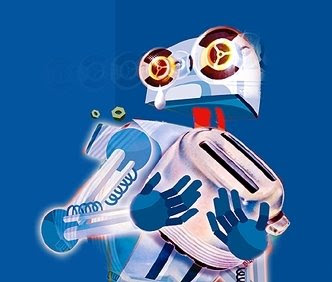
En primer lugar, we must ask ourselves if intelligence is a one-dimensional variant, if qualitatively different classes of intelligence cannot exist, even very many different classes. For example, although dolphins have an intelligence comparable to ours, it seems, however, of a nature different from the human, since we have still not managed to establish lines of communication between species. After all, computers can also differ from us qualitatively, It would not be surprising if it were this way and not another.
Also, the human brain, made of nucleic acid and proteins with an aqueous background, has been the product of three and a half billion years of biological evolution, based on random effects of mutation, selection, drift, and other influences, and driven forward by the need for survival.
On the other hand, the computer, built with electronic connections and electric current against a background of semiconductors, has been the product of forty years of human design development, based on the careful foresight and ingenuity of human beings, and driven forward by the need to serve their human users.
When two intelligences are so different in structure, history, development and purposes it is not, pues, surprising that their intelligences are also so widely different in nature.
For example, from the very beginning computers were capable of solving complex problems related to arithmetic operations with numbers, and carrying them out faster than any human being, and with much lower chances of error. If arithmetic skill is the measure of intelligence, then computers have been smarter than humans all along.
But it is possible that arithmetic proficiency and other similar talents are not everything for which the human brain was primarily designed, that kind of things, since they are not our specialty, we naturally carry them out in a rather poor way.
It is possible that human intelligence involves such subtle qualities as insight, intuition, fantasy, imagination, creativity, the ability to understand a problem as a whole and guess the answer by the ‘feeling’ of the situation. If that is so, entonces los seres humanos son muy inteligentes, y los ordenadores en realidad no son inteligentes. Ahora mismo no podemos imaginar cómo podrá remediarse esta deficiencia en los ordenadores, dado que los seres humanos no pueden programar un ordenador para que sea intuitivo creativo, por la muy buena razón de que no sabemos qué hacemos nosotros mismos cuando ejercemos esas cualidades.
¿Aprenderemos algún día a programar los ordenadores para que desplieguen una inteligencia humana de esta clase?
Concebiblemente, pero en ese caso podemos elegir no hacerlo así ante nuestra pure reluctancia a ser remplazados. In addition, ¿cuál podría ser el interés en duplicar la inteligencia humana, construir un ordenador que pueda brillar con una débil humanidad, cuando podemos de manera tan sencilla formar las cosas reales por unos ordinarios procesos biológicos? Sería algo parecido a entrenar a los seres humanos desde la infancia para llevar a cabo «maravillas matemáticas» similares a las que puede hacer un ordenador. ¿Y por qué, cuando la más barata calculadora hace eso por nosotros?
Visto de esta forma, el robotic/ordenador no nos sustituirá sino que nos servirá como nuestro amigo y aliado en la marcha hacia un glorioso futuro: si no nos destruimos a nosotros mismos antes de que comience esa marcha…
:
Informático y documentalista despistado. Se aficionó a la ciencia-ficción cuando de pequeño le regalaron unos libros infantiles asesorados por el mismísimo Asimov. Tiene un weblog dedicado a este género donde vuelca su afición: Al last de la Eternidad Pudo graduarse en la Escuela de Batalla pero llegó tarde al examen. Nevertheless, se alistó como voluntario en la Flota Internacional, donde participa desde entonces en misiones interplanetarias de paz.
Post a comment
Le recomendamos que copie su texto antes de publicarlo, sobre todo si es largo, para evitar perdidas por algún fallo al publicar. Seleccione el texto y pulse «tecla control + c». redáctelo en un editor externo, copielo de igual manera y a continuación, pulse «tecla management + v» en el cajetín del formulario de comentarios.
Gracias por comentar.
Based mostly on a piece at
Permissions beyond the scope of this license could also be out there at
Digital platform on the technological uniqueness of Roko's Basilisk, We promote the artificial intelligence of the future.